राम

गुरुवायुर्

ഗുരുവായൂർ

Guruvāyur

Bhūloka Vaikuṇṭha

Where the Lord of the Universe lives still as a four-year-old child.

Three books the temple still reads: Nārāyaṇīyam · Jñānappāna · Harināma Kīrtanam.

A temple in Kerala. Three books the temple has produced, in full, in your tongue. Read them here.

There is a small black murti standing in the dim of a low-ceilinged śrīkōvil in northern Thrissur, holding the conch in the upper-right hand, the discus in the upper-left, the mace below-left, the lotus below-right. The four-armed Janārdana posture. The chest is narrow. The waist is slim. The face, the priests will tell you, is the face of a child of about three or four years. He has never grown taller.

The light of the seven-tier deepastambham touches him at four in the morning. Devotees, having stood barefoot in the cold of the chuttambalam since two, see him for thirty seconds and then walk back out into the dark, and many of them are weeping.

This is Guruvāyur. This is Unni Kṛṣṇa. This is the same vigraha that, the bhāgavatas insist, was held in Vaikuṇṭha in Viṣṇu's own hand before the universe began. To kneel here is to kneel inside a story that begins before time and has not yet ended.

The Descent of the Murti

Vaikuṇṭha to Guruvāyur

Six stages, from the hand of Mahāviṣṇu to the small black murti standing in northern Thrissur this morning.

  1. 01

    Cosmic

    Mahāviṣṇu held the vigraha in Vaikuṇṭha. He gave it to Brahmā.

  2. 02

    Mythic

    Brahmā, in pity for the long austerity of Sutapas and Pṛśni, two beings whose love for him had become unbearable to him, gave it to them. They worshipped it for one age. In the next they were reborn as Kaśyapa and Aditi, and worshipped it again.

  3. 03

    Historic

    In the next age they were reborn as Vasudeva and Devakī. The murti stood in the Mathurā prison and watched the eighth child of Devakī come into the world, who was the One the murti had been depicting all along.

  4. 04

    Tragic

    Then Dwārakā began to drown. As the streets filled, Uddhava lifted the icon out of the water. He carried it to the shore. He stood there with it and did not know where in the new, kaliyuga-darkened earth such a thing could live.

  5. 05

    Divine

    Bṛhaspati came, the Guru of the devas, and Vāyu came, the breath of the world. They took the icon between them. They flew. Śiva was already waiting at a place called Rudratīrtha, a pond cool with the residue of his own meditation. He pointed and said: here. He moved his own seat across the water to Mammiyūr to make room.

  6. 06

    Present

    They installed him. The place was named for the two who had carried him: Guru-Vāyu-Ūr. The town of the Guru and the Wind. Every morning at three, the doors open, and the long childhood liturgy begins again.

The Theology in a Whisper

Guruvāyur is not a temple about transcendence. It is a temple about intimacy.

Its central insight is that the Pūrṇa Brahman, the Lord of Vaikuṇṭha, the same one whose body is the universe, is willing, in this kṣetra, to live as a small boy. To be fed before he is hungry. To be dressed before he is cold. To be carried in procession because his devotees want to see him. To be given a memorial day for his elephant. He is not condescending to do this. He is doing it because he likes to.

The Advaita that flows underneath this kṣetra is not a denial of form. It is a recognition that the One who has no form has, out of love, accepted form, and that the form he chose to accept here is the most defenseless form available: a child. To stand before this murti is to be taught, without a single word, that Brahman is sa-rūpa whenever a heart is ready to love a rūpa. The shapeless takes shape because someone needed something to hold.

The other thing this kṣetra teaches, through Kurūramma and through Kesavan most clearly, is that bhāva determines darśan. The Lord did not appear as a mature king to Kurūramma because Kurūramma was a mother and did not need a king; she needed a son. He appeared as a son. He did not appear as a god to Vilwamaṅgalam in the Elañji tree; he appeared as a small boy because Vilwamaṅgalam had been doing so much severe yoga that he needed a friend more than a god. He appeared as a friend.

Whatever you bring to the door of Guruvāyur, that, in the proportion you bring it, is what is on the other side of the door waiting for you. This is not a mystical claim. It is a structural fact about how the Lord here works. The murti is the same. The devotee is what changes the seeing.

The Pilgrim's Farewell

Kṛṣṇa, Guruvāyurappa,

you who let yourself be carried by the Wind,

you who let yourself be pointed to by the Guru,

you who let yourself be installed on the bank of a small pond,

you who let yourself be washed and fed and dressed and walked around your own house

every single day for five thousand years,

you who let an elephant become a king for loving you,

you who let a widow call you her son,

you who let a paralyzed grammarian write you back into health,

you who answered an illiterate poet over a learned one,

you who came to a yogī as a small boy in the Elañji tree because the yogī did not need anything else:

give me whatever I have come here ready to receive.

And if I have come here ready to receive nothing,

let the wind that brought you here brush my face once,

so that I will know to come back next year readier.


Hari, Hari, Mukunda, Janārdana,

Kṛṣṇa, Govinda, Nārāyaṇa, Hari.


Guruvāyurappa, Bhūloka Vaikuṇṭhanāthane, śaraṇam.

Image Credits

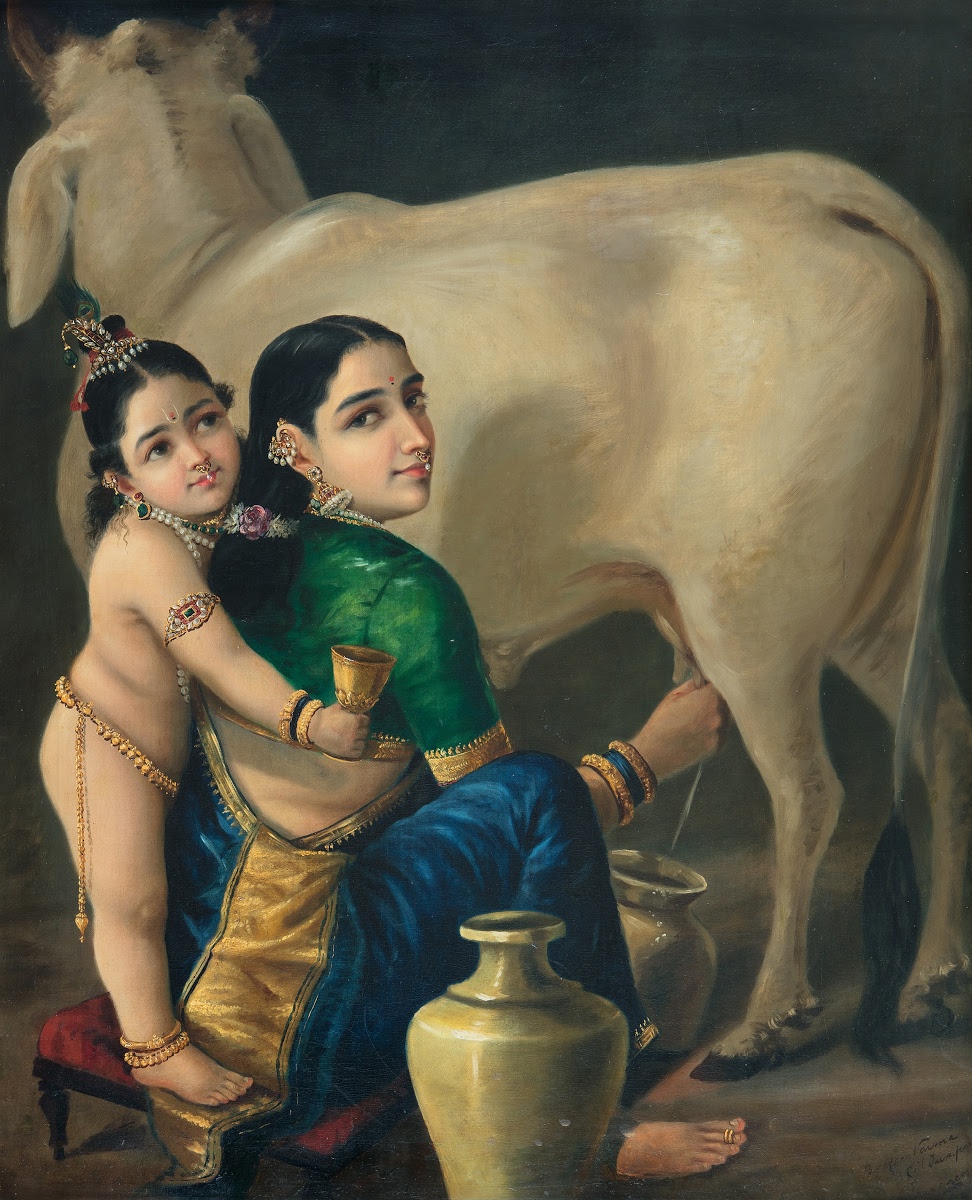
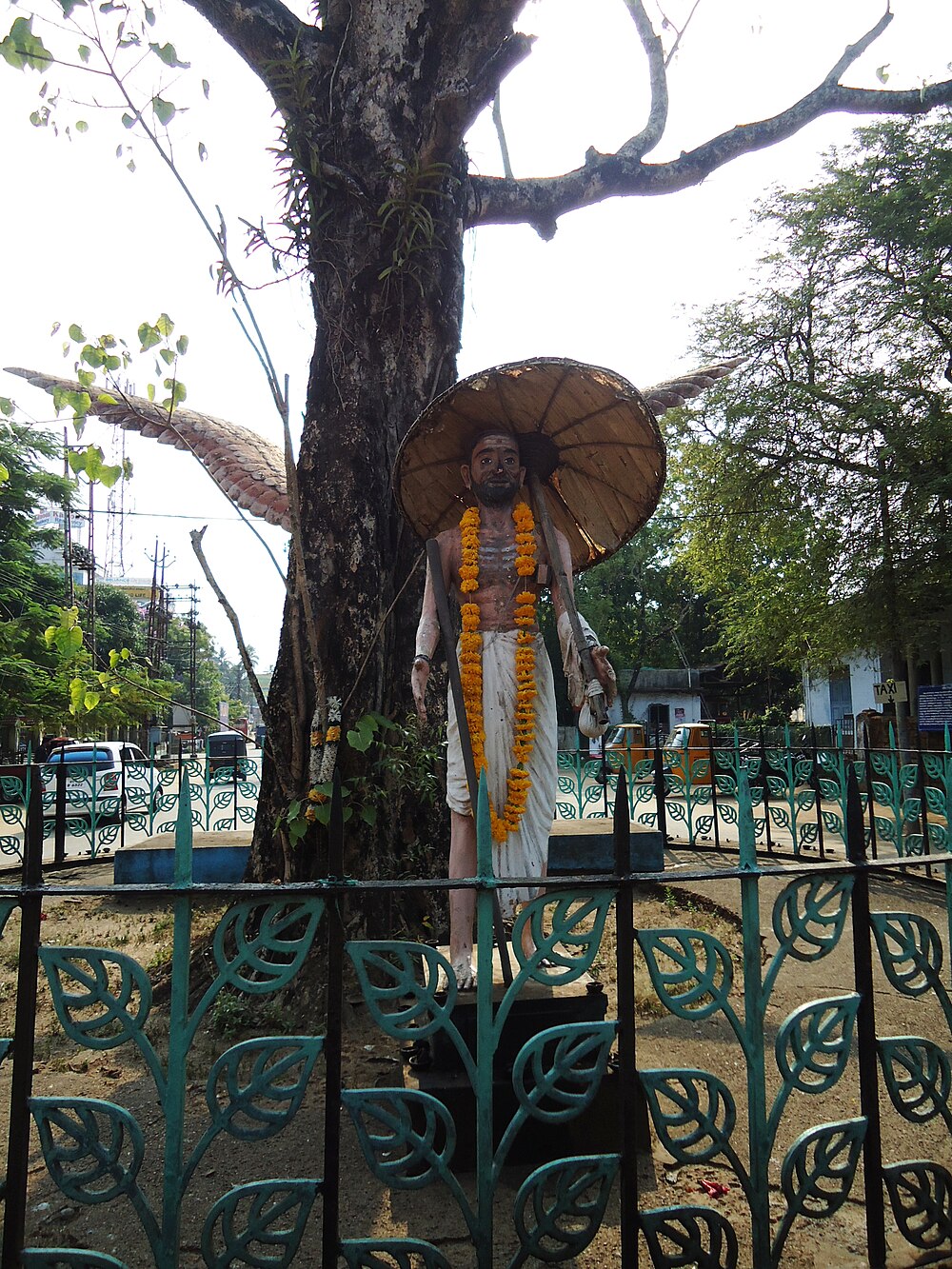
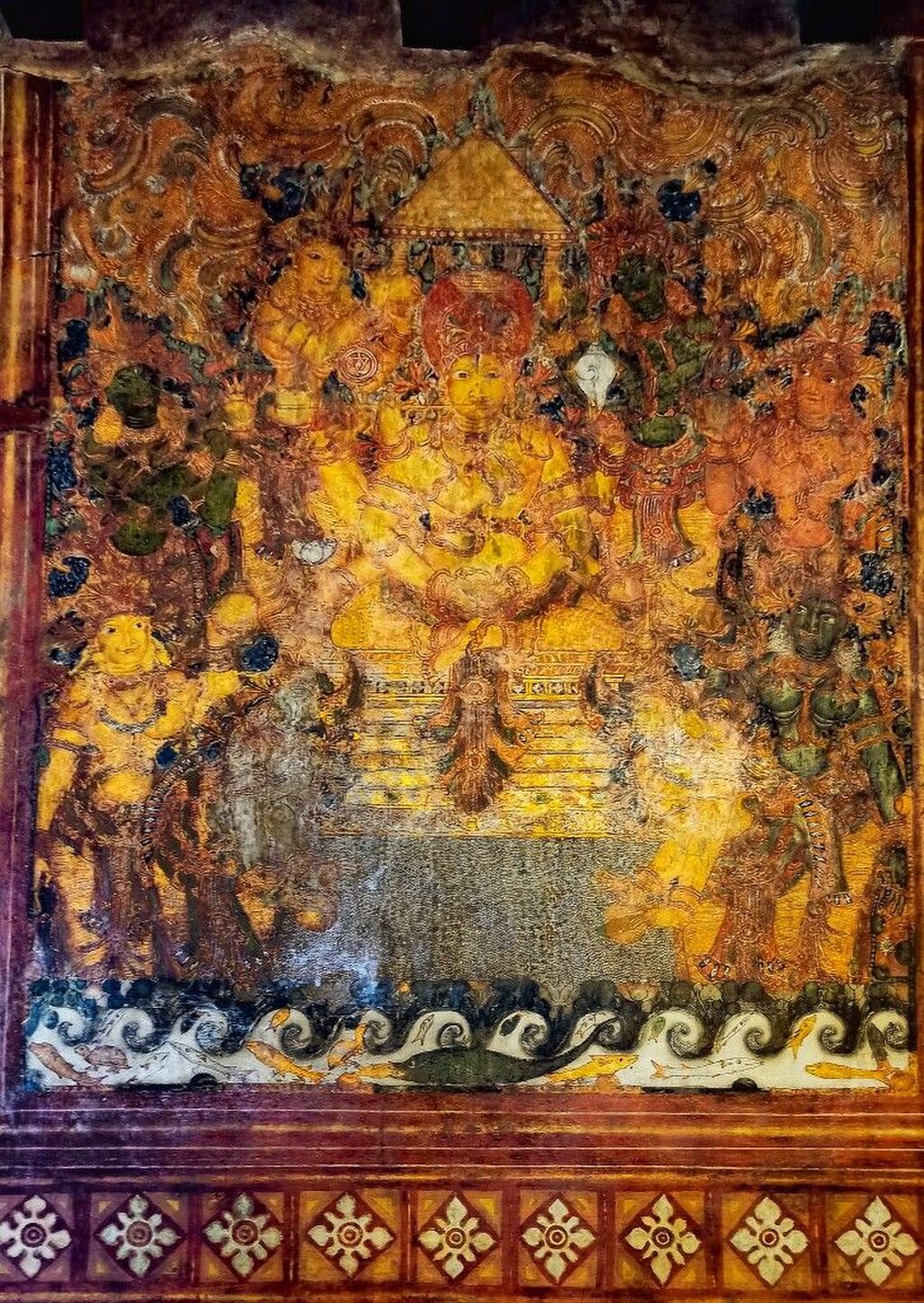
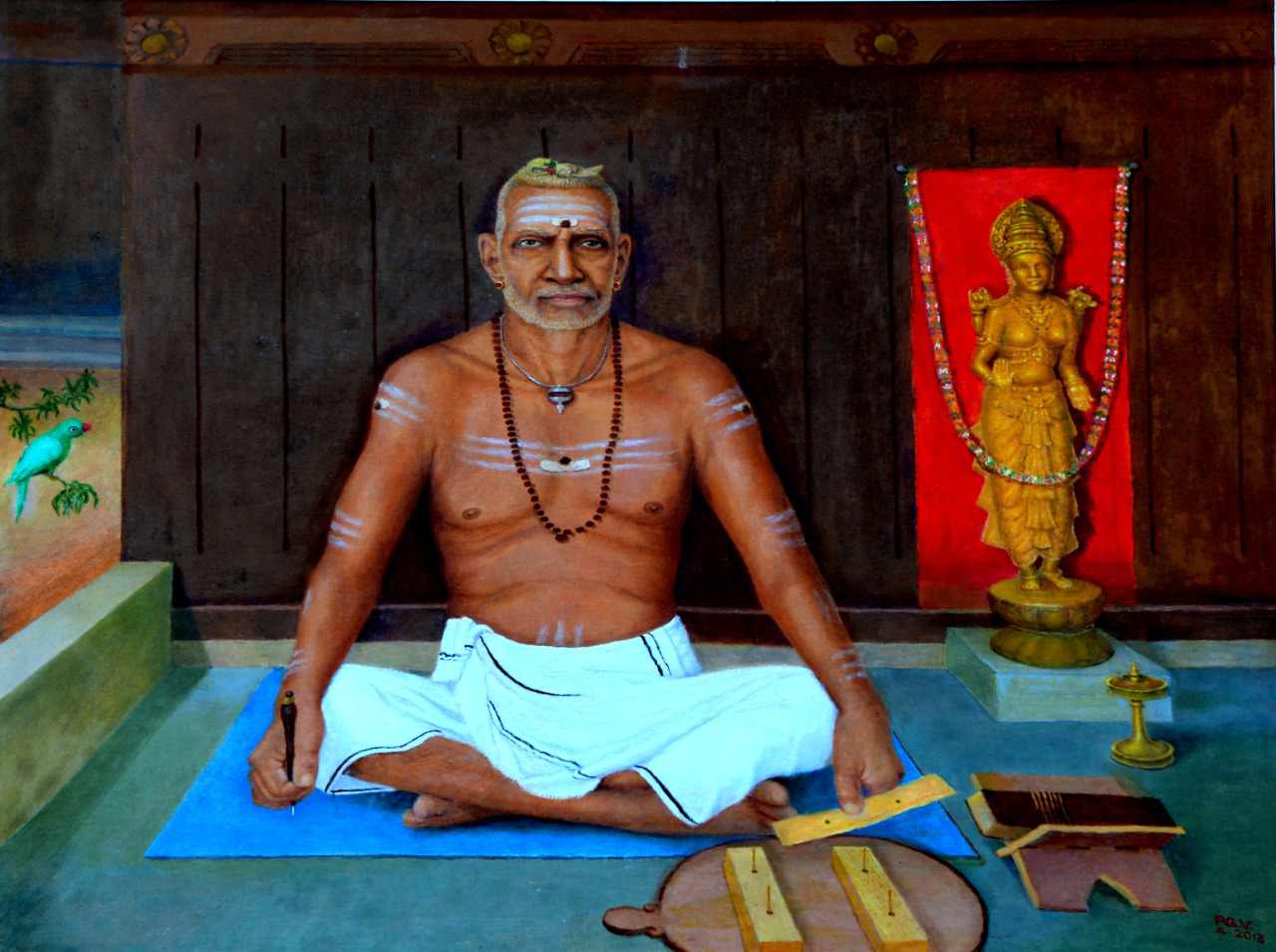
Imagery sourced from Wikimedia Commons under public domain or Creative Commons licences. Mattancherry Palace murals (Mēlpattūr card, Sutapas-tapas stage, Nārāyaṇīyam ambient) and the palm-leaf Veda manuscript (Harināma ambient) by Ms Sarah Welch (CC BY-SA 4.0). Pūntānam statue at Guruvāyur by RanjithSiji (CC BY 3.0). Ezhuthachan portrait by Rjwarrier (CC BY-SA 4.0). Krishnanāṭṭam performance and Guruvāyur temple panorama by Vinayaraj (CC BY-SA 3.0). Pre-1931 oleographs and miniatures (Vaikuṇṭha, Mathurā, Dwārakā, Ravi Varma Yashoda) are public domain. See each image’s description page on Wikimedia Commons for full attribution.