राम

Siege of Lanka, Shangri Ramayana, c. 1700, Punjab Hills

नाम महिमा

The Power of the Name

Ram Naam Japa

श्री राम राम रामेति रमे रामे मनोरमे। सहस्रनाम तत्तुल्यं राम नाम वरानने॥

By chanting 'Sri Rama, Rama, Rama', which delights the mind, one obtains merit equal to chanting all thousand names of Vishnu.

Padma Purana · Lord Shiva to Parvati

Valmiki composing the Ramayana, Kangra School, c. 18th century

The First Witness

प्रथम साक्षी

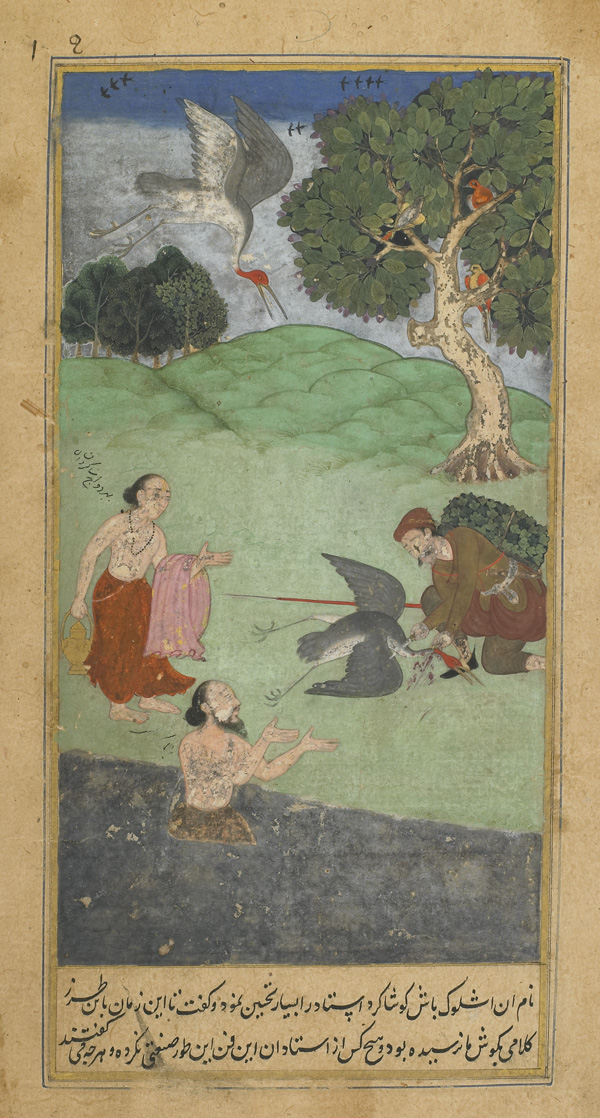
Before he was the sage who composed the Ramayana, Valmiki was Ratnakara, a highway robber who lived by plunder. One day, the sage Narada passed through his forest. When Ratnakara tried to rob him, Narada asked: will your family share the sin of your crimes, as they share the wealth? Ratnakara went home and asked. None would.

Shattered, Ratnakara returned to Narada and begged for a way out. Narada told him to sit and chant the name of Rama. But the robber's sins were so heavy that the word 'Rama' would not form on his lips. He could only say 'Mara,' which means death.

Narada said: then say that. Say 'Mara.' And Ratnakara sat and began to chant. Mara, Mara, Mara, Mara. For years he sat, unmoving, until an anthill grew around his body. And as he chanted, something happened. Mara, Mara became Ra-Ma, Ra-Ma. Death became God. The robber became the sage.

He emerged as Valmiki, the Adi Kavi, the first poet, and composed the Ramayana itself. The Name did not require his worthiness. It did not require his understanding. It required only his repetition.

मरा मरा मरा मरा

राम राम राम राम

उलटा नाम जपत जग जाना। बालमीकि भए ब्रह्म समाना॥

The whole world knows that Valmiki chanted the Name in reverse, and became equal to Brahma himself.

Ramcharitmanas · Tulsidas, Balkand

Tulsidas

तुलसीदास

In the Ramcharitmanas, Tulsidas devoted an entire section of the Balkand to Naam Mahima. These verses have been chanted across North India for four centuries.

कलियुग केवल नाम अधारा। सुमिरि सुमिरि नर उतरहिं पारा॥

Kaliyug keval naam adhaara. Sumiri sumiri nar utarahim paara.

In the age of Kali, the Name alone is the support. By remembering it again and again, one crosses over.

Ramcharitmanas · Tulsidas, Balkand

राम नाम मनिदीप धरु जीह देहरीं द्वार। तुलसी भीतर बाहेरहुँ जौं चाहसि उजिआर॥

Ram naam mani-deep dharu jeeh dehrihn dwaar. Tulsi bheetar baaherahun jaun chaahasi ujiyaar.

Place the jewel-lamp of Ram's name on the threshold of the tongue. If you desire light within and without, says Tulsi, this alone will illumine.

Ramcharitmanas · Tulsidas, Balkand, Doha 22

राम नाम अवलंब बिनु परमारथ की आस। बरसत बारिद बूँद गहि चाहत चढ़न अकास॥

Ram naam avlamb binu paramaarath ki aas. Barsat baarid boond gahi chaahat chadhan akaas.

Hoping for liberation without the support of Ram's Name is like trying to climb to the sky by grasping at falling raindrops.

Ramcharitmanas · Tulsidas, Balkand

राम नाम नरकेसरी कनककसिपु कलिकाल। जापक जन प्रहलाद जिमि पालिहि दलि सुरसाल॥

Ram naam narakesari kanakkasipu kalikaal. Jaapak jan Prahlaad jimi paalihi dali surasaal.

Ram's Name is Narasimha; Kali Yuga is the demon Hiranyakashipu. The chanting devotee is Prahlad, protected by the Lord who destroys the enemy of the gods.

Ramcharitmanas · Tulsidas, Balkand

मंत्र परम लघु जासु बस बिधि हरि हर सुर सर्ब। महामत्त गजराज कहुँ बस कर अंकुस खर्ब॥

Mantra param laghu jaasu bas bidhi Hari Har sur sarb. Mahaamatt gajaraaj kahun bas kar ankus kharb.

The supreme sacred Mantra, though very small, has under its sway Brahma, Vishnu, Shiva and all the gods. A tiny goad controls the mightiest, most furious elephant.

Ramcharitmanas · Tulsidas, Balkand, Doha 25

Sage in meditation, Kangra miniature, c. 1800

The Formless Name

निर्गुण नाम

For Kabir, Nanak, and Meera, the Name pointed not to any particular deity or form but to the nameless One who pervades all creation.

Kabir

Nirguna Bhakti

Kabir (c. 1398-1518), the weaver-poet of Varanasi, belonged to no religion and claimed all of them.

लूट सके तो लूट ले, राम नाम की लूट। पाछे फिर पछताओगे, प्राण जाहिं जब छूट॥

If you can, partake in the plunder of Ram's Name. Later you will regret, when life itself departs.

Kabir Dohe

Guru Nanak

Sikhism

Guru Nanak (1469-1539) walked across the subcontinent and founded the Sikh tradition on the sovereignty of Naam. For Nanak, Ram refers not to the prince of Ayodhya but to the nameless One who pervades all.

Chant the name of the Lord, O my mind, and all your affairs will be resolved. A being has only one thing to do: take the name of Rama, and take it hundreds of thousands of times.

Guru Granth Sahib

Meera Bai

Krishna / Ram Bhakti

Meera Bai (c. 1498-1546) was a Rajput princess who renounced palace life to sing of her beloved Krishna in the streets.

पायो जी मैंने राम रतन धन पायो। वस्तु अमोलक दी मेरे सतगुरू, किरपा कर अपनायो॥

I have received the wealth of the jewel of Ram's Name. My Guru gave me this priceless treasure; by his grace I have claimed it as my own.

Payoji Maine Ram Ratan Dhan Payo

Sankirtan procession, lithograph, c. 19th century

The Poet of Pandharpur

नाम महिमा · तुकारामाचे अभंग

Tukaram on the Power of the Name

Sant Tukaram (1608-1649) was a grocer from Dehu, near Pune, who composed over four thousand abhangas. He is the supreme poet of the Name in the Marathi tradition.

Such is Vitthala's name that it heals the disease of the world, the sum of action stored from the past. If you utter it, you annihilate rebirth. Guilt cannot dwell along with it, the three-fold fever passes away. Tuka says, The illusion of life becomes your servant and falls at your feet.

Tr. Fraser & Marathe, 1909

Be assured that this perishable body will be destroyed: why then do you not utter his name? Countless millions have been saved by his name; it has given them a place in Vaikuntha. There is nothing in the three worlds of such virtue as his name: why do you not recall it? Tuka says, His name is more glorious than the Vedas; Gopala has bestowed it on us freely.

Tr. Fraser & Marathe, 1909

Though you have made friends of the mighty, they cannot help you in the last hour. Rather utter the name of Rama; make this provision, the best of all, or Yama will gnash his teeth and rend you. Amass, if you will, crores of wealth; it will not release you from the grasp of death. Tuka says, Good sir, cut short the revolutions of birth and death!

Tr. Fraser & Marathe, 1909

I had fallen into the eddy of the world; I had been oppressed by care; I had missed the path and urgently I had raised a loud cry. I had been caught and imprisoned by the senses. Tuka says, All is well now, for I uttered the name of Vitthala.

Tr. Fraser & Marathe, 1909

You are set free from all obligations, if you recite the name of Vitthala continually; when you utter the name no sin can stay near you. Uttering his name it takes not one instant to burn up millions of the five great sins. Tuka says, Time and Death cannot enter here; our sins are consumed in flames.

Tr. Fraser & Marathe, 1909

The pleasure which his name gives; know that it is God himself. I do not say this in ignorance, for I have the approval of the saints. That he who utters the name needs any other means of attainment; do not say so. Tuka says, Through his word that man attains happiness.

Tr. Fraser & Marathe, 1909

This miraculous power of mine is developed to its height in music; this is your own gift. O God, grant me to serve you continually! Therein is a flood of love, that neither ebbs nor flows. As you utter his name, says Tuka, you perceive a deep mine of nectar.

Tr. Fraser & Marathe, 1909

I have opened a shop to deal in the name of Rama; I have samples of various kinds, help yourselves. O! be not slothful to buy this; I distribute it gratis. Each receives a share according to his store of merit. Tuka says, I have stored up the whole of this commodity.

Tr. Fraser & Marathe, 1909

A wise listener does not aspire to be an eloquent speaker; he clings to faith alone; blessed is he in the world; Brahma dwells within him. You need neither wash your face nor bathe yourself, call upon the name of Rama continually. Tuka says, be he learned or ignorant, the infinite one loves him more than his own soul.

Tr. Fraser & Marathe, 1909

Swipe to read more

The Living Tradition

जीवित परंपरा

Ramakrishna Paramahamsa

Vedanta / Bhakti

Sri Ramakrishna (1836-1886) practiced every path and found they all led to the same truth. He spoke of the Name as the path for the age of Kali.

The name of God has very great sanctity. It may not produce an immediate result, but one day it must bear fruit. One should have such faith as to be able to say: I have taken the name of God; how can I be a sinner? How can I be bound?

The Gospel of Sri Ramakrishna

Swami Ramdas

Ram Bhakti

Swami Ramdas (1884-1963) left his home with nothing but the mantra 'Om Sri Ram Jai Ram Jai Jai Ram' and walked across India. The Name was his only companion.

The Divine Name is pregnant with a great power to transform the world. It can create light where there is darkness, love where there is hate, order where there is chaos, and happiness where there is misery. For the Name is God Himself.

In Quest of God

Mahatma Gandhi

Ram Bhakti

Mahatma Gandhi (1869-1948) learned Ramanama as a child from his nurse Rambha, and it became the foundation of his entire life. His last words were 'He Ram.'

In the darkest hour of my trial, that one Name has saved me and is still saving me. You must learn to repeat the blessed name of Rama with such sweetness and such devotion that the birds will pause in their singing to listen to you; that the very trees will bend their leaves towards you, stirred by the divine melody of that Name.

Harijan; Collected Works, vol. 57

Ram Darbar, Pahari School, c. 1780

The Testimony of the Acharyas

आचार्य वचन

Thyagaraja

Carnatic / Ram Bhakti

Thyagaraja (1767-1847) composed hundreds of kritis in Telugu in praise of Lord Rama. His compositions form the backbone of Carnatic music to this day.

Is there any happiness apart from the name of Rama? Even Brahma, Shiva, Narada, and Shuka have declared that nothing compares to it.

Rama Nee Samaanamevaru

Adi Shankaracharya

Advaita Vedanta

Adi Shankaracharya (c. 788-820) unified the Vedantic tradition. Even this supreme philosopher of non-duality urged the chanting of the Name.

भज गोविन्दं भज गोविन्दं गोविन्दं भज मूढमते। सम्प्राप्ते सन्निहिते काले नहि नहि रक्षति डुकृञ्करणे॥

Worship Govinda, worship Govinda, worship Govinda, O fool! When the appointed time of death arrives, rules of grammar will not save you.

Bhaja Govindam, Verse 1

The Practice

साधना

श्री राम जय राम जय जय राम

Shri Ram Jai Ram Jai Jai Ram

  1. 1

    Sit quietly

    Find a comfortable seat. Close your eyes. Let the body settle. There is no special posture required; only that you are at ease.

  2. 2

    Begin with the breath

    Take three deep breaths. With each exhale, let go of the concerns of the day. You are making space for the Name.

  3. 3

    Take the Name

    Begin repeating 'Sri Ram Jai Ram Jai Jai Ram' silently or aloud. Let it be slow, gentle, and sincere. You may use a mala (prayer beads) of 108 beads, or simply repeat without counting.

  4. 4

    Let the Name carry you

    When the mind wanders, do not fight it. Simply return to the Name. The Name is patient. It waits for you. Over time, the repetition will deepen on its own, moving from the lips to the heart.

  5. 5

    Rest in silence

    After your practice, sit in silence for a few minutes. The vibration of the Name continues to work within. Do not rush to return to activity. Let the Name's fragrance linger.

There is no right or wrong way to chant. Whether you understand the meaning or not, whether you feel devotion or dryness, the Name does its work. As Tukaram says: even if a child calls his father 'uncle,' the father still comes.

ॐ श्री राम जय राम जय जय राम ॐ