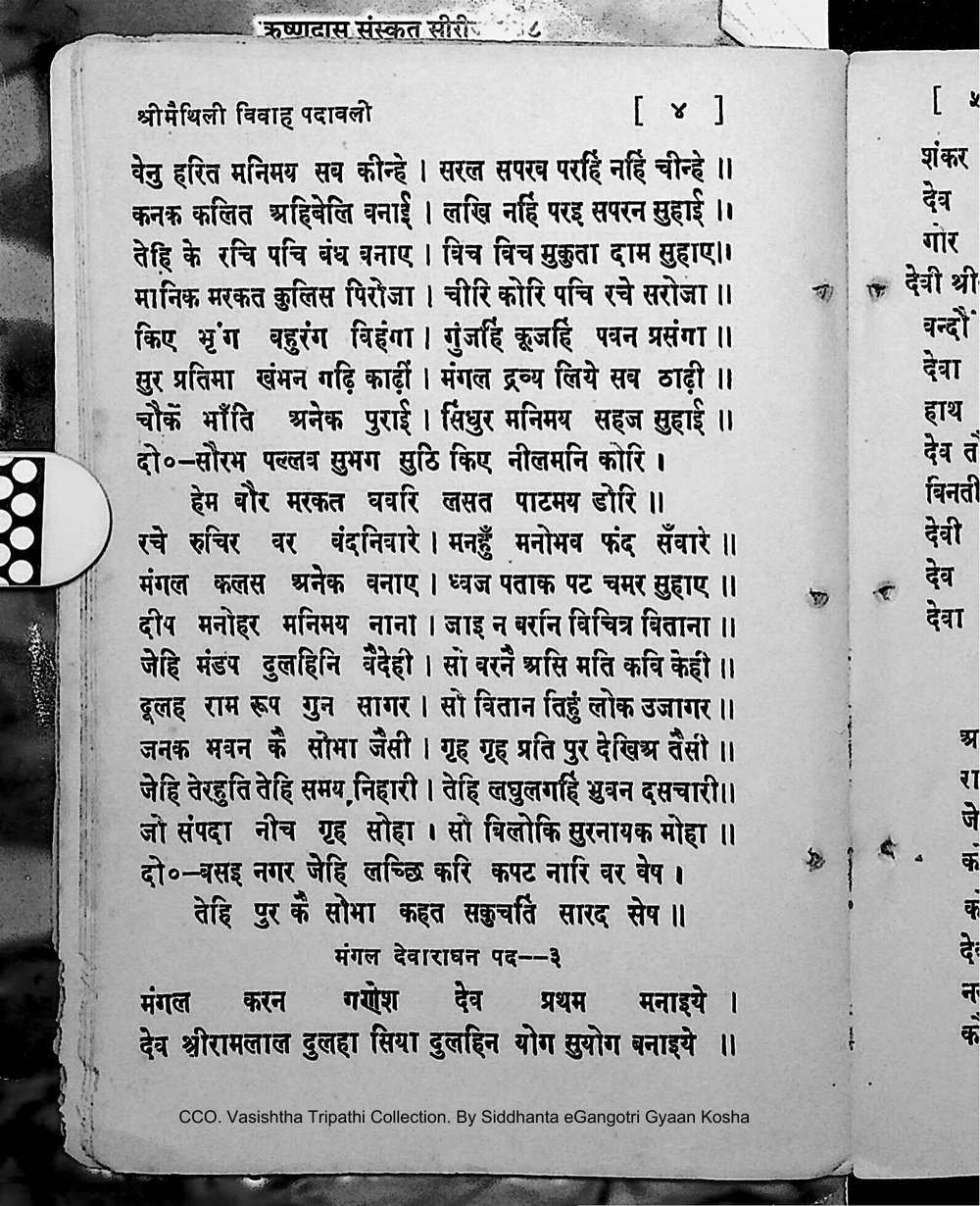
Every bamboo was fashioned from green gems; so smooth and perfect were their joints that none could discern them.
Golden, curling serpent-vines were made upon them; though lovely leaves adorned the vines, the joins could not be seen.
Ingeniously they fashioned and fastened the supporting bands, hanging strings of pearls here and there between them.
From rubies, emeralds, diamonds, and turquoise, they cut, engraved, and polished exquisite lotuses.
They made many-colored bees and birds; when stirred by the breeze, they hummed and called.
Divine figures were carved upon the pillars, each standing with auspicious offerings in hand.
Many kinds of sacred squares were laid out, and vermilion made of jewels shone naturally beautiful.
Doha: Fragrant and exceedingly lovely leaves were carved from sapphire; golden blossoms and emerald fruit gleamed upon silken cords.
Lovely festive door-garlands were arranged, as though the god of love had adorned his snares.
Countless auspicious vessels were fashioned; banners, pennants, cloth, and fly-whisks shone beautifully.
Many enchanting jeweled lamps were set out— the wondrous canopy lies beyond description.
What poet could possess the wit to describe the pavilion in which Vaidehi was to be the bride?
The bridegroom was Rama, ocean of beauty and virtue; that canopy therefore became renowned throughout the three worlds.
The splendor of Janaka’s palace was of the same order; throughout the city, every house appeared just so.
Whoever beheld Tirhut at that hour thought all fourteen worlds paltry beside it.
Even the wealth that graced the humblest dwelling there astonished Indra, sovereign of the gods.
Doha: Lakshmi herself dwelt in that city, disguised as a noblewoman; Saraswati and Shesha hesitate even to speak of that city’s splendor.
Auspicious Invocation of the Deities — Pada 3
First invoke Lord Ganesha, accomplisher of auspiciousness; O Lord, bring about the blessed union of Sri Ramalala as bridegroom and Sita as bride.