The Curse That Shapes the Ramayana
Bala Kanda, Chaupai 137
Doha 137 · Movement 1 of 2
Keep this contemplation
Preserve, print, or share
Narada declares Vishnu absolutely independent, answerable to no one and able to make good appear evil or evil good. No action binds him, no authority restrains him, and he repeatedly tests others without fear. The charges rise from delusion, yet they point toward the Lord's unfathomable freedom.
Then anger becomes curse. Vishnu deceived Narada through the form of a young king, so he must accept a human body. The sage was given a monkeylike face, so monkeys will come to the Lord's aid. The loss of the princess caused unbearable pain, so Vishnu will suffer separation from a woman.
Within the furious words, the architecture of Ram's earthly Leela appears. Human birth, the vanara allies, and separation from Sita are spoken before the one who has already promised to transform Narada's suffering into highest good.
From Narada's wounded mouth emerge the human Lord, the vanara host, and the long search for Sita.
Read the passage from the Manas
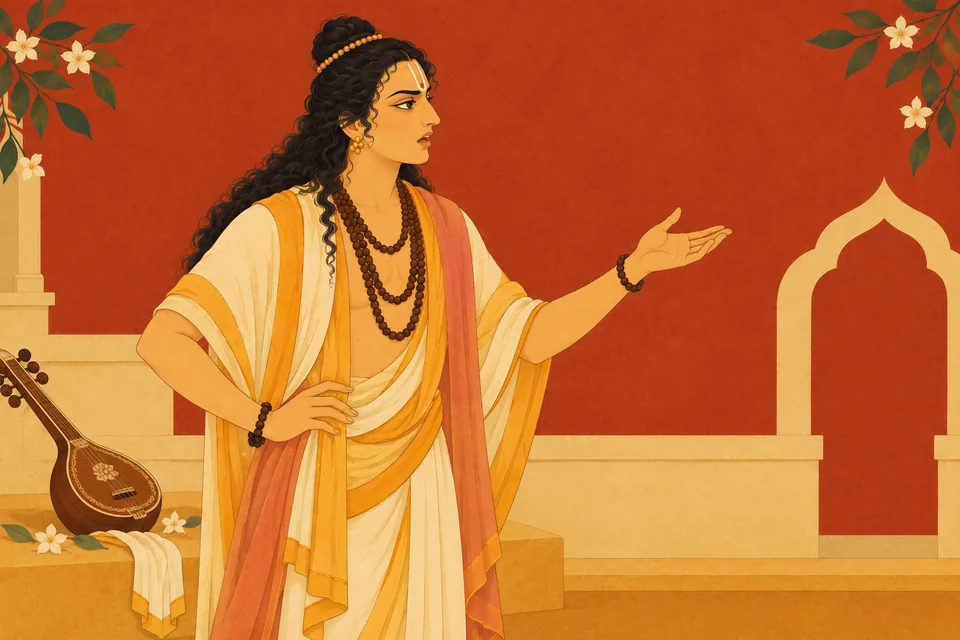
AI-created devotional illustration · Chaupai 137
RestoredhumanNarada speaks curse toHari; futurebody/monkeyassist/womanseparation onlyspeech
Source reference and artistic choices
Gita Press code81 undated · PDF pages 148 · printed pages 146. Reader passage: bala-kanda-chaupai-137. Printed numbering may differ.
Source facts
- EarlierNaradaaccusesLordabsoluteindependence good/bad reversal repeatedlyDECEIVINGeveryone notfrightening/testing; ironicfinebeginning notgiftedhouse/heavenlyreward
- Curse says TAKEFORMINWHICHYOUDECEIVEDME not specificallyyoungman'sform; monkeysassistbecausehewasgivenmonkeyappearance, womenseparation distress asspokenfutureterms
- Selected currentCURSET OHARI notactualRama/avatar/army/separationoutcome; originalhumanNarada restored, notcurrentmonkey
Artistic choices
- ApprovedoriginalhumanNarada naturalbrownclean-shavenblackhairknot Vaishnavcreamochrerose/darkbeads imaginedidentity retained; exactfacesagesrobes notauth
- Standingwaistportrait firmangrybrow addressingunseenHari lowopenpalm otherownwaist, exactgesture/expression artistchoice notliteralcurseforce
- Minimalrust/ochrecreamcityarch simplewhiteflowers/tealleaves/customaryvina imaginarysetting no futureactualevents/magic or giftedhouseproof
An imaginative interpretation, not a historical portrait or documentary evidence.
परम स्वतंत्र न सिर पर कोई। भावइ मनहि करहु तुम्ह सोई।। भलेहि मंद मंदेहि भल करहू। बिसमय हरष न हियँ कछु धरहू।। डहकि डहकि परिचेहु सब काहू। अति असंक मन सदा उछाहू।। करम सुभासुभ तुम्हहि न बाधा। अब लगि तुम्हहि न काहूँ साधा।। भले भवन अब बायन दीन्हा। पावहुगे फल आपन कीन्हा।। बंचेहु मोहि जवनि धरि देहा। सोइ तनु धरहु श्राप मम एहा।। कपि आकृति तुम्ह कीन्हि हमारी। करिहहिं कीस सहाय तुम्हारी।। मम अपकार कीन्ही तुम्ह भारी। नारी बिरहँ तुम्ह होब दुखारी।।
"You are supremely independent; no one stands above you. Whatever pleases your mind, that alone you do. You turn the good into bad and the bad into good. Neither surprise nor joy do you hold in your heart."