Bhakti, Jnana, Vijnana, Vairagya
Bala Kanda, Chaupai 111
Doha 111 · Movement 1 of 2
Keep this contemplation
Preserve, print, or share
Parvati asks for the supreme truth in which wise sages remain absorbed through direct realization. Bhakti, jnana, vijnana, and vairagya must each be described with their distinctions, relations, and living signs.
She asks also for the many mysteries of Ram she has not known how to name. Shiva, Guru of the three worlds, should hide nothing merely because the limited disciple could not formulate every question.
Her inquiry is beautiful because it contains no guile. As Shiva listens, every deed of Ram rises within his heart. Tears cover his eyes, his body thrills, and the form of Raghunath appears inwardly, bringing limitless bliss.
Before Shiva answers, Ram appears within him and turns philosophy into tears.
Read the passage from the Manas
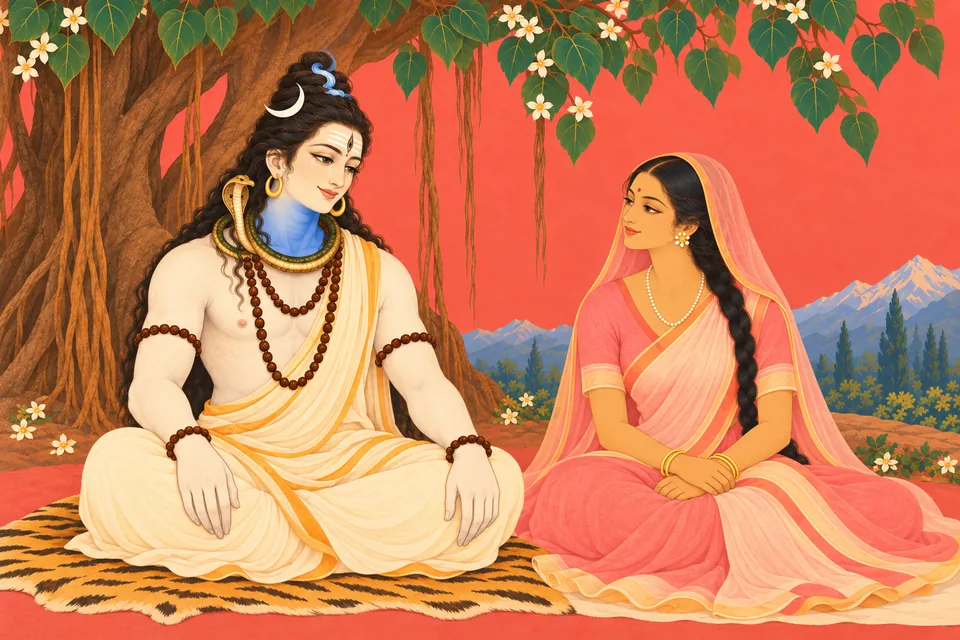
AI-created devotional illustration · Chaupai 111
Shiva pleased by guileless questions, loving joy and tear-filled eyes
Source reference and artistic choices
Gita Press code81 undated · PDF pages 126 · printed pages 124. Reader passage: bala-kanda-chaupai-111. Printed numbering may differ.
Source facts
- Uma's naturally lovely guileless questions please Shiva
- Rama deeds come to Shiva's heart; loving thrill and eyes filled with water; selected gentle joy and tears rather than literal heart image
Artistic choices
- Approved adult braided rosecream Uma and ivoryash Shiva blue only throat/crescent/Ganga short wave-symbol/serpent/rudraksha cream drape; faces/ages/clothes/gestures exact imagined conventions unauthenticated
- Shiva viewer-left and Uma viewer-right at his anatomical left, softly smiling moist eyes with small cheek tears confirmed in crop, quietly resting hands and receptive Uma
- Banyan roots/floral accents/mountain scene/tiger-patternhide/cloth seat artistic details not authenticated geography/botany
- Loving thrill conveyed by gentle expression, no literal goosebump pattern claimed; Rama deeds/form stay inward remembrance, no actual external Rama or heart-window figure
An imaginative interpretation, not a historical portrait or documentary evidence.
पुनि प्रभु कहहु सो तत्व बखानी। जेहिं बिग्यान मगन मुनि ग्यानी।। भगति ग्यान बिग्यान बिरागा। पुनि सब बरनहु सहित बिभागा।। औरउ राम रहस्य अनेका। कहहु नाथ अति बिमल बिबेका।। जो प्रभु मैं पूछा नहि होई। सोउ दयाल राखहु जनि गोई।। तुम्ह त्रिभुवन गुर बेद बखाना। आन जीव पाँवर का जाना।। प्रस्न उमा कै सहज सुहाई। छल बिहीन सुनि सिव मन भाई।। हर हियँ रामचरित सब आए। प्रेम पुलक लोचन जल छाए।। श्रीरघुनाथ रूप उर आवा। परमानंद अमित सुख पावा।।
Then, O Lord, explain that truth in which the wise sages remain absorbed through vijnana. Describe bhakti, jnana, vijnana, and vairagya, each with its distinct divisions.