The Enemy Rejoices at the King's Trust
Bala Kanda, Chaupai 160
Doha 160 · Movement 1 of 2
Keep this contemplation
Preserve, print, or share
Pratapbhanu places the hermit's command upon his head, ties the horse to a tree, and sits. He praises the ascetic, bows at his feet, and marvels at the fortune that brought him to such a refuge. Then, regarding the host as a father, he asks gently for his name.
The king still does not recognize the man before him, but the fallen ruler knows Pratapbhanu. He is enemy, warrior, and king, skilled in deception and determined to recover through cunning what he lost by force. Memory of royal pleasure burns within his chest like a furnace.
The guest's simple words enter his ears. Instead of softening vengeance, trust gives it opportunity. He gathers the old enmity close and rejoices inwardly, preparing an identity suited to the devotion Pratapbhanu already feels.
Pratapbhanu bows as to a father, and the defeated king warms his revenge at that trust.
Read the passage from the Manas
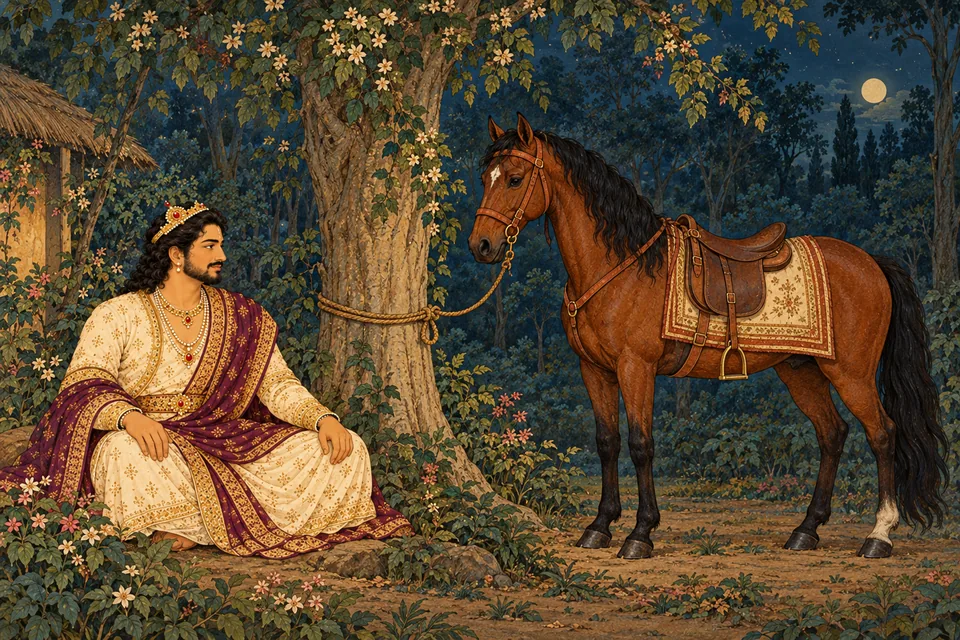
AI-created devotional illustration · Chaupai 160
Kingtieshorse toTREEandSITS afteragreeingstay; depictedaftertie
Source reference and artistic choices
Gita Press code81 undated · PDF pages 166, 167 · printed pages 164, 165. Reader passage: bala-kanda-chaupai-160. Printed numbering may differ.
Source facts
- KING(महीसा) agrees respectfully TIESHORSEtoTREEandSITS notbuffalo; selectedresultafterties part1.
- Kingpraisesbowsfeet callsenemyFATHER asksregardhimSONANDSERVANT andNAME. HonestKINGdoesNOTrecognize, enemyDOESrecognize, formerKINGKSHATRIYA deceitfulfoe.
- EnemychestburnsLIKEPOTTERKILNFIRE simile notactualfire; hearingकाना meansINEARS notoneeye/earDEMON, humanenemyrecallsenmityhappy.
Artistic choices
- ApprovedPratapbhanu D154 curlyblackhair shortbeard wheatbrown rubycrown creamPLUMshawl andbayhorse D158 blackmanewhiteforeheadmark russetbridle retained verifiedheadcrop.
- NEWfullhorsebodybaycoat fourdistinctsolidhooves longblacktail whitehindpastern brownleathersaddle creamrustsaddlecloth unverifiedartistmodels/gear. LooseleadloopTREE, kingseatedownkneehands imaginedforesthermitageclearing boughs moon/nightsky; exacttie/pose/place/moon notauthenticatedhistoricaldetails.
An imaginative interpretation, not a historical portrait or documentary evidence.
भलेहिं नाथ आयसु धरि सीसा। बाँधि तुरग तरु बैठ महीसा।। नृप बहु भाँती प्रसंसेउ ताही। चरन बंदी निज भाग्य सराही।। पुनि बोले मृदु गिरा सुहाई। जानि पिता प्रभु करउँ ढिठाई।। मोहि मुनीस सुत सेवक जानी। नाथ नाम निज कहहु बखानी।। तेहि न जान नृप नृपहि सो जाना। भूप सुह्रद सो कपट सयाना।। बैरी पुनि छत्री पुनि राजा। छल बल कीन्ह चहइ निज काजा।। समुझि राजसुख दुखित अराती। अवाँ अनल इव सुलगइ छाती।। सरल बचन नृप के सुनि काना। बयर सँभारि हृदयँ हरषाना।।
"Very well, my lord. I place your command upon my head." The king tied his horse to a tree and sat down. He praised the tapasvi in many ways, bowed at his feet, and praised his own good fortune.